
Terrazzo Floor Maintenance: Building a Program That Prevents Restoration
Terrazzo lasts decades with the right care and degrades quickly with the wrong care. Here is what a maintenance program should include.
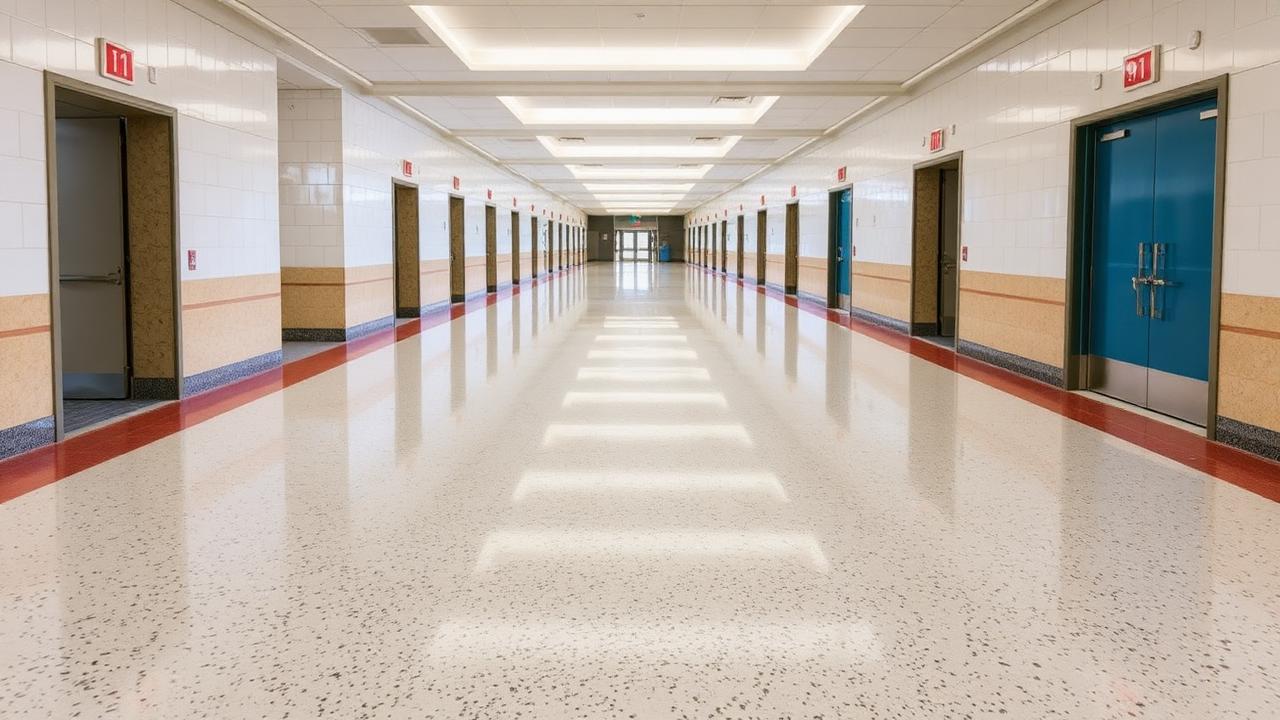
Terrazzo is one of the few flooring materials that can outlast the building it was installed in. Institutional corridors, transit facilities, schools, and hospital lobbies across the New York metro area are still running on terrazzo poured generations ago.
That durability leads to a maintenance assumption that is not quite right. Terrazzo is extremely durable structurally, but its surface finish is not, and the two get conflated. A terrazzo floor that has been maintained with the wrong products for a decade is structurally sound and visually finished.
Two types, two sets of rules
Traditional cement-based terrazzo uses a cementitious binder holding marble or granite chips. It is somewhat porous, sensitive to acids, and benefits from sealing.
Epoxy terrazzo uses a resin binder. It is non-porous, more chemically resistant, and does not require the same sealing approach. It can, however, be damaged by heat and by aggressive solvents.
Applying a cement-terrazzo protocol to an epoxy floor, or the reverse, produces poor results. Identifying which one you have is step one, and in older buildings with multiple renovation phases you may have both.
The wax question
For decades the standard approach to terrazzo was to apply floor finish, buff it, strip it, and reapply. Many buildings still run this cycle.
It works, in the sense that it produces shine. But finish builds up in low-traffic areas, wears through in traffic paths, discolors over time, and the periodic stripping introduces harsh chemicals to the floor on a recurring basis. Stripper residue in joints and edges is a persistent problem in older institutional buildings.
The alternative is a polished terrazzo approach, where the surface is mechanically refined and maintained without coating. Higher initial cost, lower recurring cost, better appearance consistency, and no strip-and-recoat cycle. For most commercial and institutional buildings holding the asset long term, the math favors it.
What a maintenance program includes
Divider strips and joints
Brass, zinc, and plastic divider strips are part of the appearance of a terrazzo floor and they collect residue at the edges. Buildup along strips is one of the first visible signs of a program that is cleaning the field and ignoring the details. Edge work needs to be specified explicitly or it will not happen.
When restoration is genuinely needed
Terrazzo needs restoration when the surface has lost its finish across the field, when years of finish buildup have to be removed, when repairs and patches have created an uneven appearance, or when the floor has never been properly flattened since installation.
Restoration involves grinding, honing, and polishing, in that order, with grouting of pinholes and voids where the original pour requires it. Done correctly, it produces a floor that looks new and can then be held with maintenance rather than repeated.
Highland maintains and restores terrazzo
We provide terrazzo and stone floor care for commercial, institutional, and healthcare facilities across New York City, Westchester, and Long Island, including both restoration and ongoing maintenance programs.
Call 516-361-3511 or request an on-site evaluation of your floors.
Stone & Terrazzo Floor Care — Maintenance & Restoration
Serving NYC, Westchester, and Long Island. Request an on-site walkthrough and we will put a written scope together for your building.
Grinding, Honing, Polishing: What Each Stone Floor Process Actually Does
Grinding, honing, and polishing are different processes with different outcomes and costs. Here is what each one does to a stone floor.
ReadWhy Your Marble Lobby Looks Dull Six Months After Restoration
A polished marble lobby that dulls within months usually has a maintenance problem, not a restoration problem. Here are the common causes.
Read