
Why Your Marble Lobby Looks Dull Six Months After Restoration
A polished marble lobby that dulls within months usually has a maintenance problem, not a restoration problem. Here are the common causes.
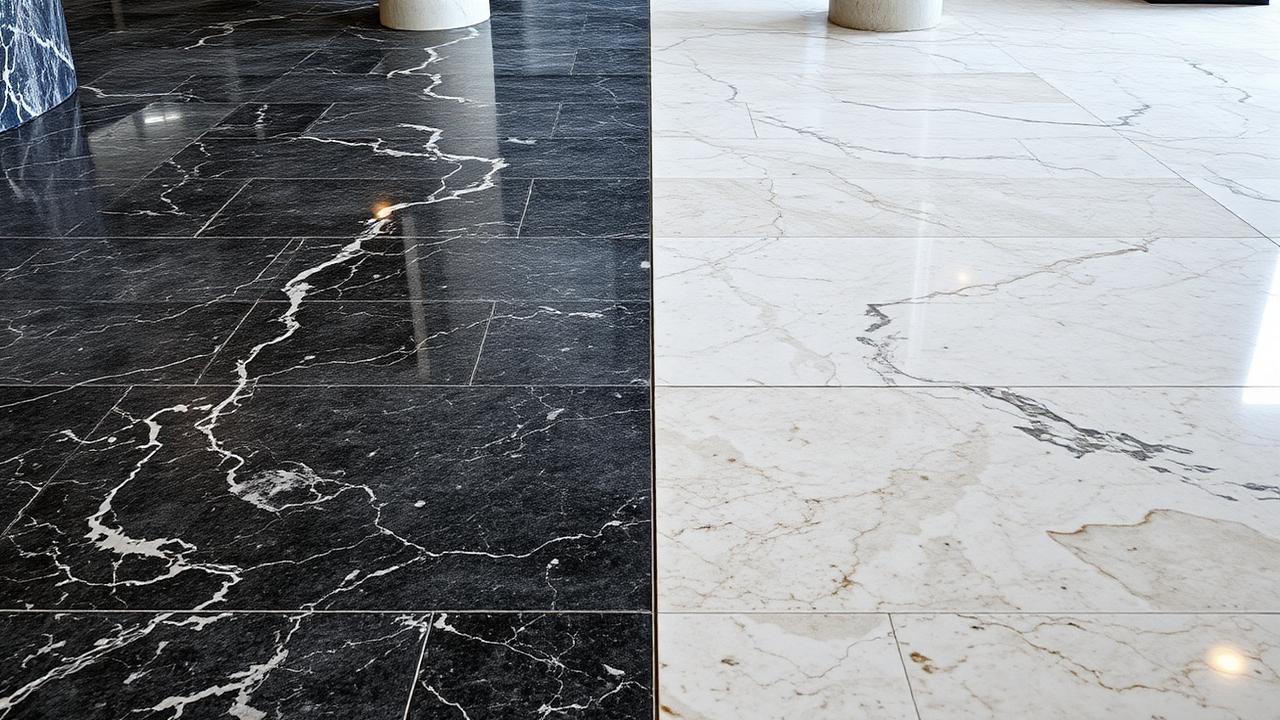
It is a familiar sequence. A building spends significant money restoring a marble lobby. For a few weeks it looks extraordinary. By month four the reflection is softer. By month six there is a visible dull path from the entry to the elevators, and the property manager is wondering whether the restoration was done badly.
Usually it was not. What failed was everything that happened after.
Grit is the primary cause
Polished stone dulls because it is abraded. The abrasive is sand, salt, and dirt tracked in on shoes, ground against the surface by every footstep. In a busy Manhattan or Westchester lobby, that is thousands of passes daily concentrated in a narrow path.
The single most effective control is matting. Effective entry matting requires enough length for several footfalls, which in a high-traffic entry means considerably more than the small mat most buildings have. Undersized matting is the most common physical cause of premature dulling, and it is also the cheapest to fix.
The wrong cleaner does damage that looks like wear
Marble, limestone, and travertine are calcium-based and react with acid. Many general-purpose cleaners, bathroom cleaners, and vinegar-based products are acidic enough to etch the surface on contact.
Etching is not a stain and cannot be cleaned off. It is a physical change to the stone surface, and it requires honing to correct. When a floor develops a cloudy appearance with no obvious pattern, the cause is frequently a product substitution somewhere in the cleaning program that nobody documented.
Only pH-neutral products formulated for natural stone should touch a polished floor, and the approved product should be named in the cleaning specification rather than left to whoever is stocking the closet.
Winter salt is a New York-specific problem
From December through March, buildings in the New York metro area take in ice-melt residue continuously. Salt is both abrasive and chemically aggressive to calcium-based stone. Left on the surface, it dulls, etches, and can leave a persistent white residue.
Buildings with significant stone entries need a winter protocol: extended matting, frequent daytime removal of tracked salt and moisture, and neutral cleaning rather than a rinse that spreads residue further. Buildings that skip this reliably need restoration every few years.
Standing water and improper wet cleaning
Excess water left on stone can penetrate through joints, cause efflorescence, and leave mineral deposits from hard water as it evaporates. Mopping with dirty water simply redistributes grit across the surface.
Correct wet cleaning means clean solution, frequent water changes, and prompt drying. This is a training matter more than an equipment matter.
The absence of maintenance polishing
Even with correct daily care, polished stone in high traffic loses reflectivity gradually. Maintenance polishing addresses that at the surface, before the wear is deep enough to require honing.
The right frequency depends on traffic. A high-volume lobby may need attention monthly in the traffic path. A moderate one may need it quarterly. The point is that it should be scheduled and priced as a recurring line item, not treated as an emergency response to a floor that has already gone flat.
One more cause worth checking
Some restorations are finished with a topical coating rather than a mechanical polish, because a coating produces immediate shine at lower cost. Coatings wear in traffic paths, cloud, and eventually require stripping. If a floor developed a patchy appearance with visible wear lines rather than uniform dulling, a coating may be the reason, and the fix is different.
Build the maintenance program with your restoration
Highland provides stone and terrazzo restoration and ongoing maintenance across New York City, Westchester, and Long Island. We would rather set up a maintenance program that protects your investment than restore the same floor every three years.
Call 516-361-3511 or request an evaluation of your lobby.
Stone & Terrazzo Floor Care — Maintenance & Restoration
Serving NYC, Westchester, and Long Island. Request an on-site walkthrough and we will put a written scope together for your building.
Grinding, Honing, Polishing: What Each Stone Floor Process Actually Does
Grinding, honing, and polishing are different processes with different outcomes and costs. Here is what each one does to a stone floor.
ReadTerrazzo Floor Maintenance: Building a Program That Prevents Restoration
Terrazzo lasts decades with the right care and degrades quickly with the wrong care. Here is what a maintenance program should include.
Read