
Terminal Cleaning vs. Daily Cleaning: What Hospital Facility Managers Need to Know
Terminal cleaning and daily cleaning serve different purposes in a hospital. Here is how the protocols differ and where facilities most often fall short.
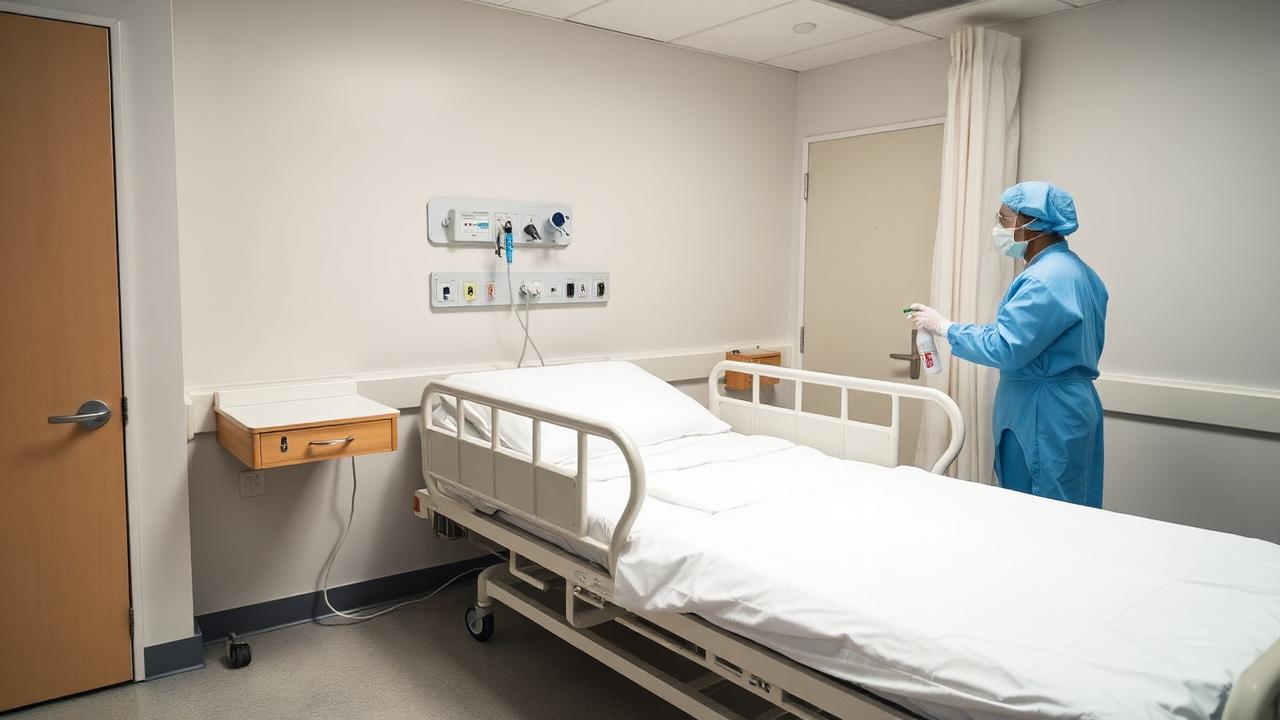
Ask three people at a hospital what terminal cleaning means and you may get three answers. To an infection preventionist it is a specific decontamination protocol. To a nurse manager it is the reason a bed is unavailable for another ninety minutes. To a facilities director it is a line item that drives labor cost and throughput at the same time. All three views are correct, and the gap between them is where most environmental services problems start.
Understanding the difference between daily cleaning and terminal cleaning is not academic. It determines staffing models, product selection, dwell times, documentation, and ultimately whether a surveyor finds your program defensible.
Daily cleaning keeps a room usable
Daily cleaning happens while the patient is still in the room. The goal is to control the accumulation of soil and reduce bioburden on the surfaces people touch most, without disrupting care or moving equipment that is in active use.
In practice that means high-touch surfaces get the attention: bed rails, over-bed tables, call buttons, IV poles, door handles, light switches, bathroom fixtures, and grab bars. Floors are cleaned. Trash and linen are removed. The room is restocked. The work is fast, repeatable, and done in a fixed sequence so nothing gets skipped when the shift gets busy.
What daily cleaning is not is a reset. Curtains stay up. Equipment stays where it is. Surfaces behind and beneath fixtures are generally not addressed. That is by design, and it is fine, as long as everyone understands the ceiling on what daily cleaning delivers.
Terminal cleaning resets the room
Terminal cleaning happens after discharge, after transfer, or after a case in a procedural space. The room is empty and the assumption is that every surface is potentially contaminated until it has been addressed.
The scope expands considerably. Privacy curtains come down for laundering or replacement. Mattresses and bed frames are cleaned on all surfaces, including the underside and the frame joints. Equipment is wiped down or removed. Walls are spot-cleaned or fully cleaned depending on the room type. Floors are cleaned edge to edge, not just in the traffic path. Vents, ledges, and horizontal surfaces above eye level are included.
Sequence matters more here than in daily cleaning. Work moves from clean areas to dirty areas, and from high surfaces to low, so contamination is not redistributed onto surfaces that were already addressed. The bathroom is last.
The detail most programs get wrong: dwell time
Disinfectants are only effective if the surface stays visibly wet for the contact time listed on the product label. That time varies by product and by target organism, and it can range from thirty seconds to ten minutes. A surface wiped and immediately dried has been cleaned. It has not necessarily been disinfected.
This is the single most common finding when we audit an existing program. Staff are working hard and moving fast, and speed quietly defeats the chemistry. The fix is rarely more labor. It is usually sequencing the room so that surfaces treated early have time to dwell while the technician works elsewhere, and selecting products whose contact times are realistic for the workflow.
Documentation is part of the protocol
A cleaning program that cannot be described in writing is difficult to defend during a survey. At minimum, a hospital should be able to produce the written protocol for each room type, the current product list with EPA registration numbers and label contact times, training records for the staff performing the work, and a record of what was cleaned and when.
Some facilities layer on verification, whether that is fluorescent marker auditing, ATP testing, or supervisor checklists. Verification is useful, but it is a supplement to a documented protocol, not a substitute for one.
Where outsourcing helps and where it does not
Contracting environmental services out does not transfer accountability. The facility still owns the outcome. What a specialized vendor should bring is trained staff who understand infection control rather than general cleaners assigned to a clinical floor, documented protocols that map to room type, named EPA-registered products, and records that a compliance officer can review without a scramble.
If a prospective vendor cannot tell you which products they use and what the contact times are, that is the end of the evaluation.
Talk to Highland about your environmental services program
Highland Facilities and Logistics provides healthcare cleaning for hospitals, surgical centers, laboratories, and medical offices across New York City, Westchester, and Long Island. Our staff are trained in infection control and bloodborne-pathogen handling, and our documentation is built for the questions compliance teams actually ask.
Call 516-361-3511 or request an on-site walkthrough and we will put together a written scope for your facility.
Healthcare Cleaning
Serving NYC, Westchester, and Long Island. Request an on-site walkthrough and we will put a written scope together for your building.
EPA-Registered Disinfectants: How to Verify Your Cleaning Vendor Is Using the Right Products
Not all disinfectants are equal. Here is how facility managers can verify a cleaning vendor's products are EPA-registered and appropriate for the space.
ReadWhat Surveyors Look For in Environmental Services: A Facility Manager's Preparation Guide
Accreditation surveys frequently touch environmental services. Here is what reviewers examine, and how to prepare your cleaning program in advance.
Read