EPA-Registered Disinfectants: How to Verify Your Cleaning Vendor Is Using the Right Products
Not all disinfectants are equal. Here is how facility managers can verify a cleaning vendor's products are EPA-registered and appropriate for the space.
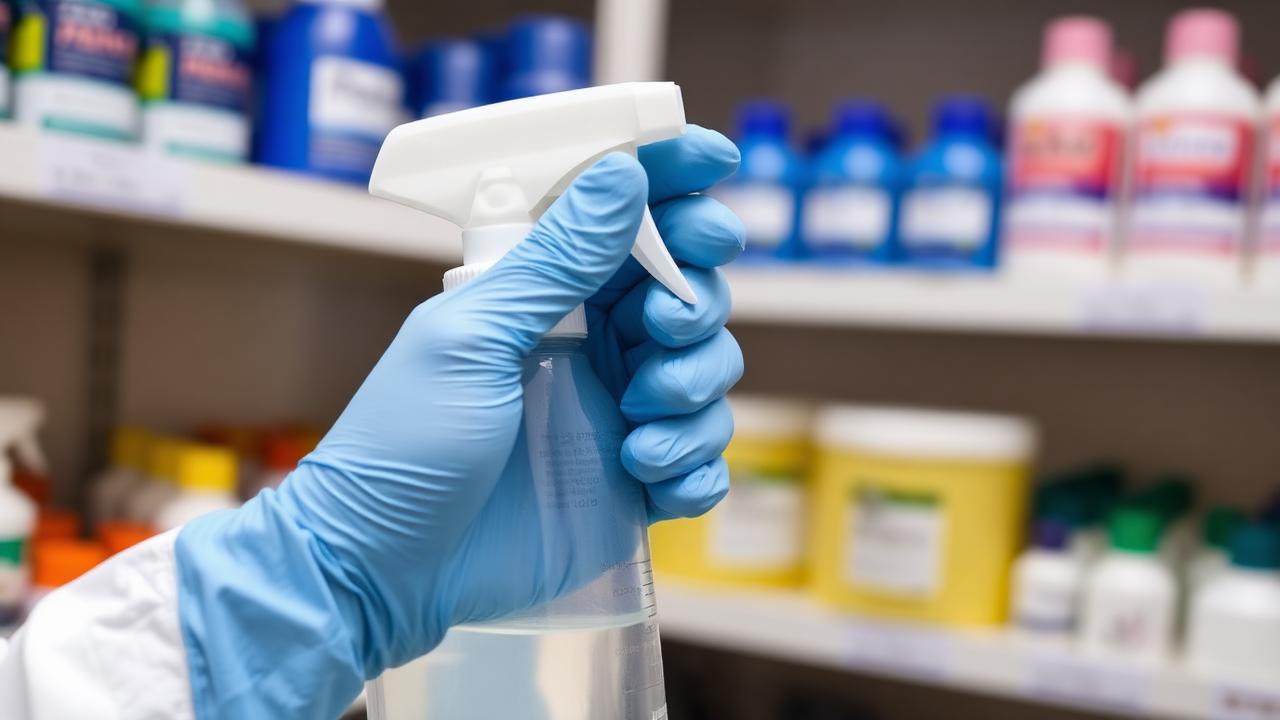
There is a moment that catches facility managers off guard more often than it should. A compliance officer, surveyor, or risk manager asks a simple question: what is on our surfaces? If the answer requires a phone call to a vendor and a wait for a response, the program has a gap.
Product selection is one of the few parts of a cleaning program that can be verified on paper in a few minutes. Here is how to do it.
What EPA registration actually means
In the United States, any product marketed as a disinfectant is regulated as a pesticide and must be registered with the Environmental Protection Agency. Registration means the manufacturer submitted efficacy data supporting the claims on the label, and that the EPA reviewed it.
Every registered product carries an EPA registration number printed on the label. That number is the anchor for everything else. It ties the product to a specific list of organisms it has been shown to kill, under specific conditions, at a specific contact time.
A product described as a cleaner, a degreaser, or a sanitizer is not the same thing. Sanitizers reduce microbial load. Disinfectants make kill claims. The distinction matters in a clinical setting.
The label is the specification
The disinfectant label is a legal document, not marketing copy. It tells you three things that should be reflected in your cleaning protocol.
First, the organism list. A disinfectant effective against a broad range of bacteria may or may not carry claims for the specific pathogens your facility is most concerned about. Products carrying claims against spore-forming organisms are a different category from general-purpose disinfectants, and using the wrong one in a room that needs the other is a meaningful failure.
Second, contact time. This is the duration the surface must remain visibly wet for the claim to hold. It is often different for different organisms on the same label. If your staff wipe and move on in fifteen seconds and the label says four minutes, the claim on the label does not apply to your process.
Third, surface compatibility and dilution. Concentrates diluted incorrectly are either ineffective or damaging. Some disinfectants degrade certain plastics, elastomers, and finishes over time, which is how facilities end up replacing equipment housings and casework years earlier than expected.
Five questions to ask a vendor
You do not need a chemistry background to evaluate this. Ask for the following and read the answers.
A vendor operating a serious program can produce all five without hesitation. A vendor who responds with brand names and reassurance is telling you something.
Where programs quietly drift
Even well-designed programs erode. Products get substituted when a distributor has a supply issue, and the substitute has a different contact time that nobody updates in the protocol. A new supervisor introduces a favorite product. Concentrate dispensers fall out of calibration. Wipes dry out in an open container and the surface never stays wet long enough to matter.
The safeguard is a documented product list that is reviewed on a schedule and treated as a controlled document, so substitutions are a decision rather than an accident.
Compatibility with sensitive environments
In laboratories, imaging suites, and spaces with sensitive electronics, product selection carries an additional constraint. Residues, aerosols, and off-gassing that are irrelevant in an office corridor can interfere with instrumentation or damage equipment. These spaces need a protocol written for them rather than the building standard applied uniformly.
Get a straight answer from Highland
Highland Facilities and Logistics uses hospital-grade, EPA-registered products, and we can name them. Our healthcare cleaning teams work in hospitals, surgical centers, labs, and medical offices across New York City, Westchester, and Long Island, with documentation built to survive a compliance review.
Call 516-361-3511 or request a walkthrough of your facility.
Healthcare Cleaning
Serving NYC, Westchester, and Long Island. Request an on-site walkthrough and we will put a written scope together for your building.
Terminal Cleaning vs. Daily Cleaning: What Hospital Facility Managers Need to Know
Terminal cleaning and daily cleaning serve different purposes in a hospital. Here is how the protocols differ and where facilities most often fall short.
ReadWhat Surveyors Look For in Environmental Services: A Facility Manager's Preparation Guide
Accreditation surveys frequently touch environmental services. Here is what reviewers examine, and how to prepare your cleaning program in advance.
Read