
Sidewalk Cleaning Responsibilities Every New York Property Manager Should Know
Property owners are responsible for the sidewalk in front of their building. Here is what that means for cleaning schedules and violations.
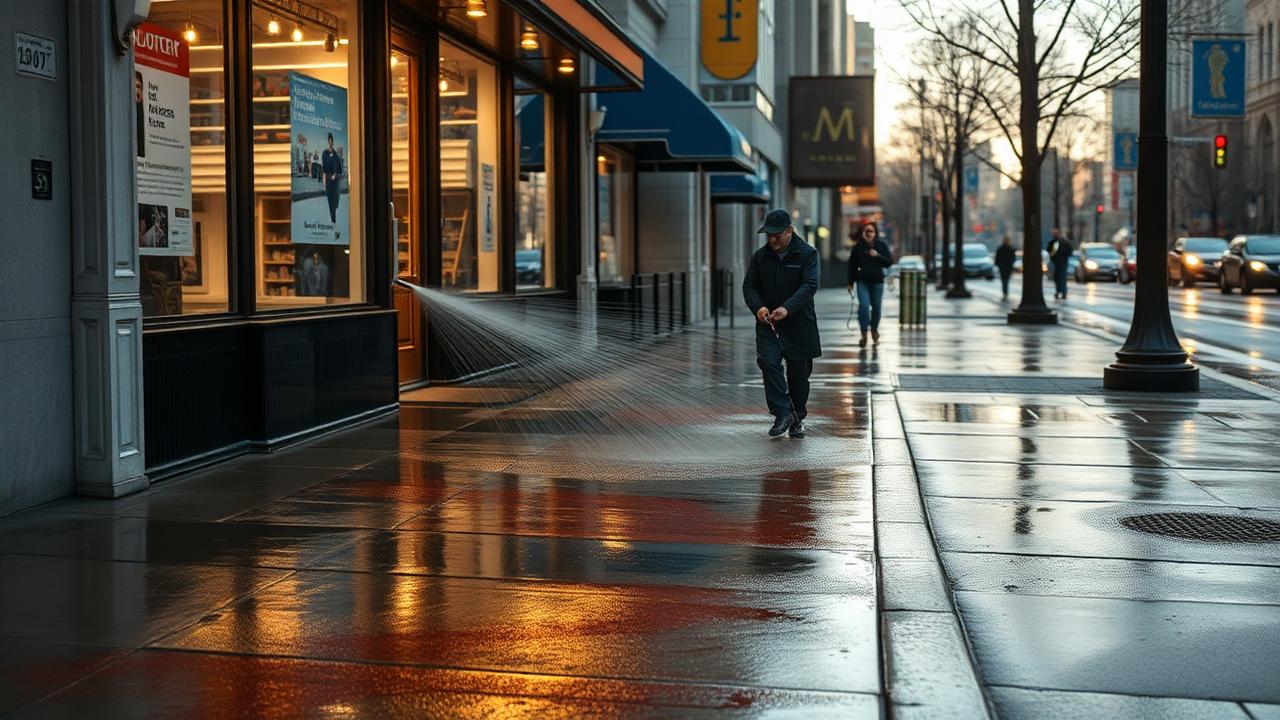
The sidewalk in front of a commercial building is a maintenance obligation, a liability exposure, and the first impression a tenant or visitor forms, and it is frequently managed with less rigor than any interior space.
Here is what property managers in New York City and the surrounding counties should understand about it.
The sidewalk is the owner's responsibility
In New York City, property owners are generally responsible for keeping the sidewalk abutting their property clean, along with a portion of the roadway adjacent to the curb. The Department of Sanitation enforces this, and violations carry fines that escalate with repeat occurrences.
Municipalities throughout Westchester and Long Island have their own local codes covering sidewalk cleanliness, obstruction, and snow and ice removal. The specifics vary by jurisdiction, so a portfolio spanning multiple municipalities should confirm requirements for each location rather than assume a single standard applies.
Beyond the fines, sidewalk condition is a liability question. Slip and fall claims arising from accumulated grease, algae, standing water, or ice are a routine source of exposure for commercial property owners.
Daily attention and periodic washing are different tasks
Daily sweeping and debris removal keep a sidewalk compliant. They do not keep it clean. Over months, sidewalks accumulate ground-in soil, gum, grease near entries and service doors, organic staining, and algae in shaded areas that no amount of sweeping addresses.
Periodic power washing is what resets the surface. For most commercial properties, a schedule of two to four washes annually is appropriate, with more frequent attention for buildings with ground-floor food service, high pedestrian volume, or heavy shade.
Timing the schedule to the New York year
The most valuable wash of the year is the spring wash, once salt application has ended. Winter leaves salt residue, sand, and accumulated grime that is visible the moment the weather turns and people start looking at the exterior again.
A late fall wash before freezing temperatures arrive is the second priority, since it removes leaf staining and organic buildup that otherwise sits on the surface through winter. Mid-summer washes address gum, grease, and the general accumulation of a high-traffic season.
The problem areas on almost every property
Runoff and containment
Washing a commercial sidewalk sends water somewhere. Where that water carries grease, detergents, or debris, discharging it into a storm drain can create a regulatory problem. Professional operations plan for containment or filtration where the contaminants warrant it, and they schedule work at times that minimize pedestrian disruption.
Coordinate with the interior program
Exterior condition and interior condition are connected. A clean sidewalk reduces the grit tracked into the lobby, which directly reduces wear on stone and terrazzo floors and the frequency of restoration. Buildings that treat entry as a single system, from the exterior walk through the matting to the lobby floor, spend less on both.
Put your exterior on a schedule
Highland provides commercial power washing for sidewalks, plazas, façades, and back-of-house areas across New York City, Westchester, and Long Island, on scheduled programs rather than one-off calls.
Call 516-361-3511 or request a site assessment and proposed schedule.
Power Washing
Serving NYC, Westchester, and Long Island. Request an on-site walkthrough and we will put a written scope together for your building.