
Hot Water or Cold Water Power Washing: Matching the Method to the Surface
Pressure is only one variable in exterior cleaning. Here is how temperature, pressure, and surface type determine the right method.
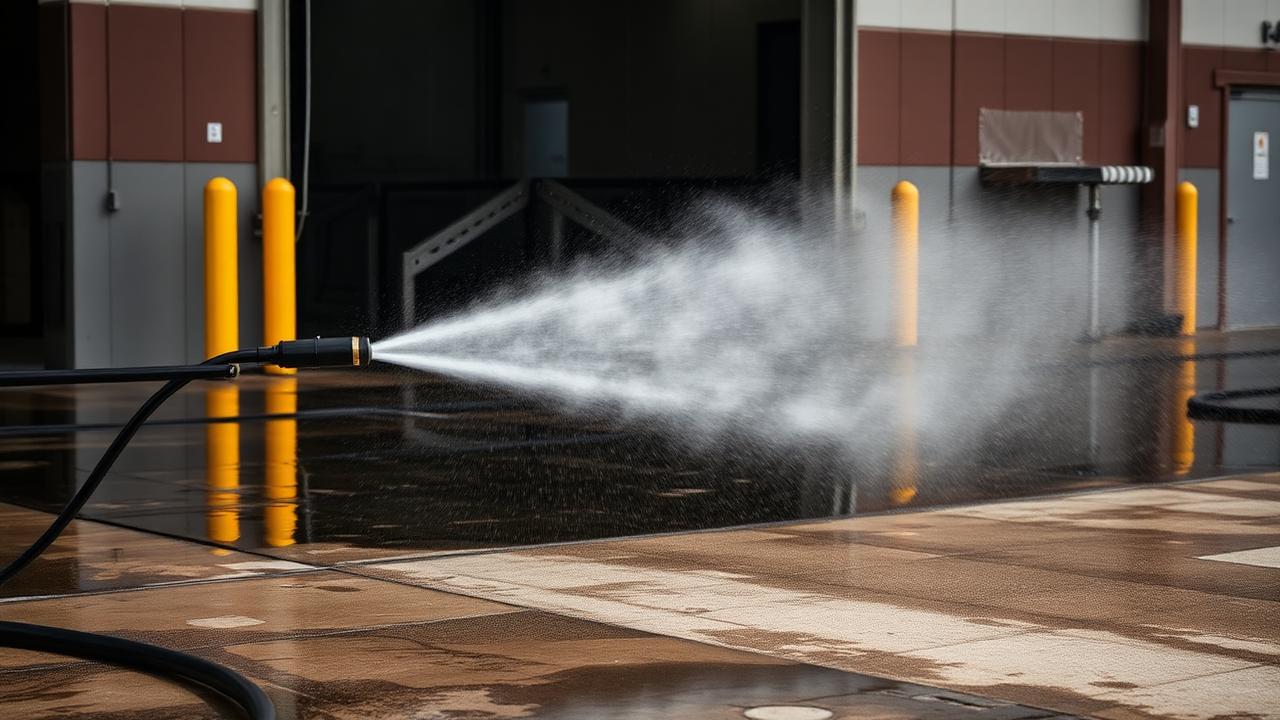
Exterior cleaning proposals often reduce to a single number: how many PSI. That number is the least informative variable in the process. Temperature, chemistry, flow rate, nozzle selection, and distance all matter as much or more, and the surface being cleaned determines every one of them.
Getting this wrong is expensive. Excessive pressure on the wrong substrate causes damage that cannot be reversed, and the damage often is not visible until the surface dries.
What hot water actually does
Heat dissolves and mobilizes oils, greases, and organic residues that cold water simply pushes around. That makes hot water the correct choice for a specific category of soil.
Grease at a restaurant service entrance, oil staining in a parking structure, gum on a sidewalk, food residue at a loading dock, and heavy organic film on a plaza are all hot water problems. Attempting them with cold water usually means compensating with more pressure, which is where surface damage begins.
Hot water also cleans faster, which matters when work has to be done in a limited window.
Where cold water is sufficient
General dirt, dust, pollen, mud, and light surface soil come off with cold water and appropriate detergent. Large horizontal areas with light soiling, general sidewalk maintenance, and periodic rinse-downs do not need heat.
Cold water is also less costly to run and does not carry the burn risk or the equipment complexity of heated systems.
Low pressure is often the right answer
Soft washing uses low pressure with appropriate cleaning solutions to remove biological growth, algae, and staining without mechanical force. On surfaces where pressure causes damage, this is the correct method and no amount of technique makes high pressure acceptable.
Surfaces that generally require a low-pressure approach include historic masonry, soft brick, aged mortar joints, stucco and EIFS, painted surfaces, wood, and most roofing. Pressure washing soft mortar removes it. Pressure washing EIFS drives water behind the system. Both are common and both are costly.
Surface guidance in brief
Streaking and the reason uniformity is hard
The most common complaint after a power washing job is that the surface looks striped. This happens when a wand is used freehand on a large flat area, since overlapping passes clean unevenly at the edges. Surface cleaner attachments, consistent distance, systematic overlap, and appropriate dwell time for chemistry are what produce a uniform result.
On multi-story façades, uniformity also requires working in a sequence that prevents dirty runoff from streaking sections already cleaned.
Water management is part of the job
Runoff carrying detergents, oils, or debris into a storm drain can create a regulatory issue. Commercial work should include a plan for containment, collection, or filtration where the contaminants warrant it. This is a routine consideration for professionals and an afterthought for everyone else.
Highland scopes each surface
We provide hot and cold water power washing for sidewalks, façades, plazas, parking structures, and back-of-house areas across New York City, Westchester, and Long Island, with the method scoped to the surface rather than applied uniformly.
Call 516-361-3511 or request a site assessment.
Power Washing
Serving NYC, Westchester, and Long Island. Request an on-site walkthrough and we will put a written scope together for your building.