
Relocating Medical Equipment Between Facilities: A Planning Checklist
Moving clinical equipment between facilities involves decontamination, documentation, and downtime. Use this checklist to plan the move.
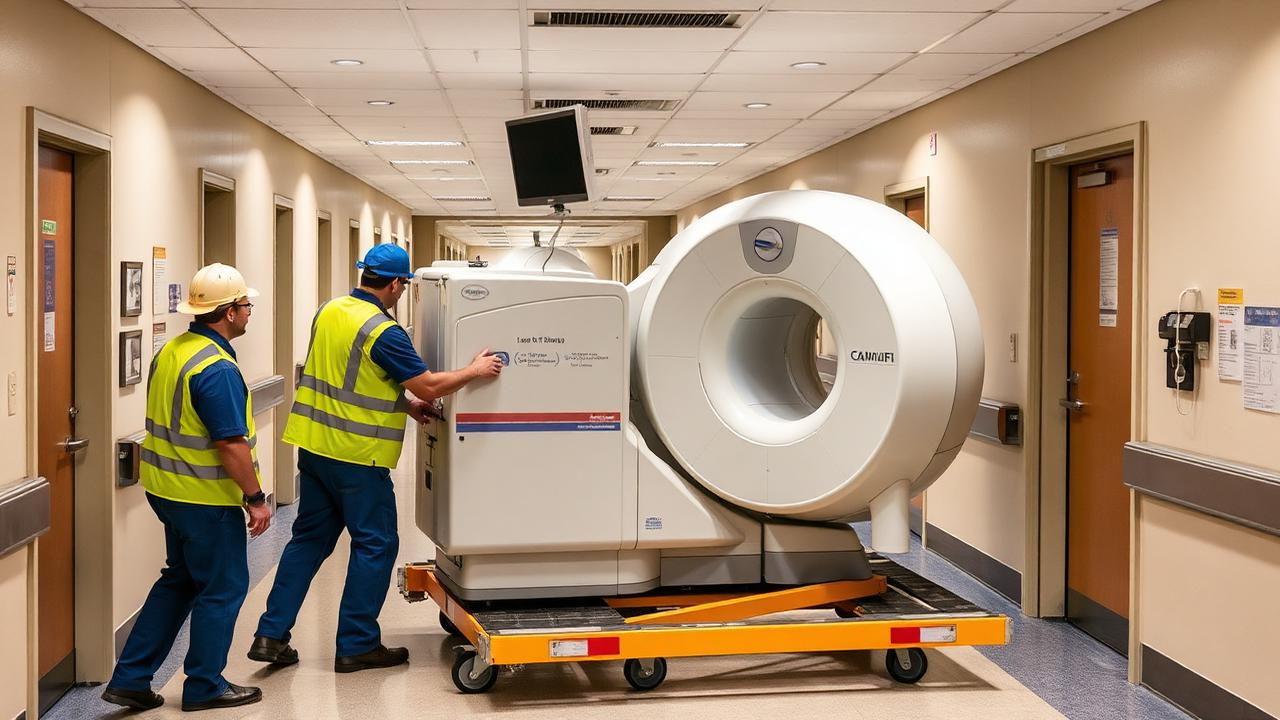
Equipment moves go wrong in predictable ways. An item arrives and cannot be placed into service because nobody can confirm it was decontaminated. A device is damaged in transit and the condition record at pickup is a single line item. A move scheduled for a Friday turns into a Monday because the receiving space was not ready.
None of these are transport failures. They are planning failures. Here is the sequence that avoids them.
Four to six weeks out: inventory and classify
Build a complete list of what is moving, with manufacturer, model, serial number, and asset tag. Then classify each item by the constraints it carries.
This classification determines the schedule, not the other way around. An item that needs a manufacturer technician on both ends sets the critical path.
Three to four weeks out: confirm the destination is ready
Verify that the receiving space has the electrical service, data connections, medical gas, ventilation, drainage, and floor loading each item requires. Confirm the physical path from the loading dock to the final position, including door widths, elevator dimensions and capacity, corridor turns, and thresholds.
Measure rather than assume. A device that does not fit through a door on arrival becomes an expensive problem in a hallway.
Two to three weeks out: sequence for clinical continuity
Determine what can be out of service simultaneously and what cannot. Some moves need to be staged over multiple days so a service line is never fully down. Others need a weekend window.
Communicate the resulting downtime to clinical leadership in writing, with specific dates and times per item, so scheduling can be adjusted rather than disrupted.
One to two weeks out: finalize documentation
Confirm who signs for each item at both ends. Establish the chain-of-custody format and confirm both facilities will receive copies. Confirm insurance coverage and declared values. If the move crosses a border, confirm customs documentation and any decontamination certification required.
Move day: condition, decontamination, custody
Document condition at pickup with photographs, not just a checkbox. Perform and record decontamination with the product, contact time, and technician noted. Package to preserve the decontaminated state. Record every custody transfer with a name and a timestamp.
At delivery, inspect and document condition before the receiving party signs. Exceptions noted at delivery are resolvable. Exceptions discovered a week later usually are not.
After the move: return to service
Recalibration, validation, and functional checks should be scheduled before the move rather than arranged after it. Update asset records with the new location. Confirm biomedical engineering has the item in its inventory at the correct site so preventive maintenance does not fall through.
The most common oversight
It is the accessories. Probes, cables, carts, foot pedals, mounting hardware, and consumables travel separately, get boxed by someone who was not on the plan, and arrive in a different order than the device. Inventory accessories with the same rigor as the equipment itself and keep them with the parent item.
Highland manages the whole sequence
We sanitize medical equipment to clinical standards, document chain of custody, and handle domestic and international transport, serving healthcare facilities across New York City, Westchester, and Long Island.
Call 516-361-3511 to plan an upcoming equipment move.
Medical Equipment Transport
Serving NYC, Westchester, and Long Island. Request an on-site walkthrough and we will put a written scope together for your building.