
Chain of Custody for Medical Equipment: What Your Documentation Should Include
When medical equipment moves between facilities, documentation is the deliverable. Here is what a complete chain-of-custody record should contain.
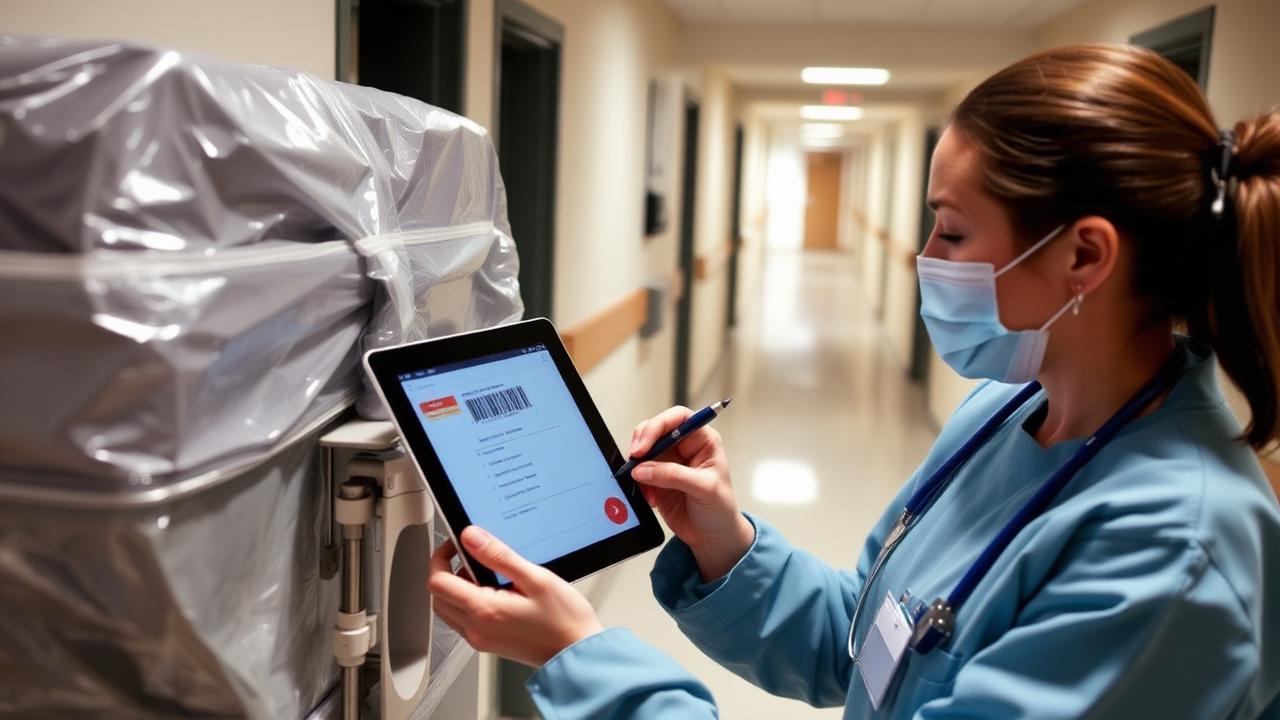
When a piece of medical equipment leaves a facility, the physical move is the easy part. The part that creates exposure is the gap in the record between the moment it left one set of hands and the moment it arrived in another.
Chain of custody exists to close that gap. It is a continuous, documented account of who had the item, what condition it was in, and what was done to it, from origin to destination.
Why it matters more for equipment than for freight
General freight documentation answers one question: did the item arrive. Medical equipment documentation has to answer several more. Was it decontaminated before transport, and by what method. Was it handled by trained personnel. Was it exposed to conditions that could affect calibration or function. Can the receiving facility place it into service without independently reprocessing it.
If the record cannot answer those questions, the receiving facility has to assume the worst, which usually means reprocessing on arrival and a delay in returning the asset to service.
What a complete record contains
Decontamination is the substantive step
The documentation is only as good as the process it records. Equipment leaving a clinical environment should be decontaminated before it enters a vehicle, using products appropriate to both the contamination risk and the equipment surfaces.
Surface compatibility is a genuine constraint. Aggressive disinfectants degrade certain housings, gaskets, and display panels over repeated exposure. Manufacturer cleaning guidance for the specific device should govern product selection, and where guidance conflicts with facility protocol, the conflict should be resolved deliberately rather than by whoever is holding the wipe.
Preserving the decontaminated state
Decontaminating equipment and then placing it in a vehicle that carried something else that morning defeats the purpose. Containment matters, whether that is wrapping, sealed cases, or separation within the vehicle. So does the cleanliness of the transport equipment itself, which should be on its own documented schedule.
Cross-border and long-distance moves
International movement adds documentation requirements around customs classification, declared value, and in some cases certification that equipment has been decontaminated. Building those requirements into the record from the start is considerably easier than reconstructing them at a border.
Who should hold the record
Both parties should. The originating facility needs it for its asset and compliance records. The receiving facility needs it to place the item into service. A vendor who retains the only copy has created a dependency that helps nobody.
Highland handles sanitization, documentation, and transport
Most cleaning companies stop at the door. We sanitize medical equipment to clinical standards, document the full chain of custody, and coordinate domestic and international transport from there, which consolidates what is usually a two-vendor process.
Call 516-361-3511 to discuss an equipment move.
Medical Equipment Transport
Serving NYC, Westchester, and Long Island. Request an on-site walkthrough and we will put a written scope together for your building.