
Post-Renovation Cleaning in Occupied Medical Buildings: Managing Dust and Infection Control
Renovating an occupied healthcare facility puts patients on the other side of a barrier. Here is how cleaning fits into infection control.
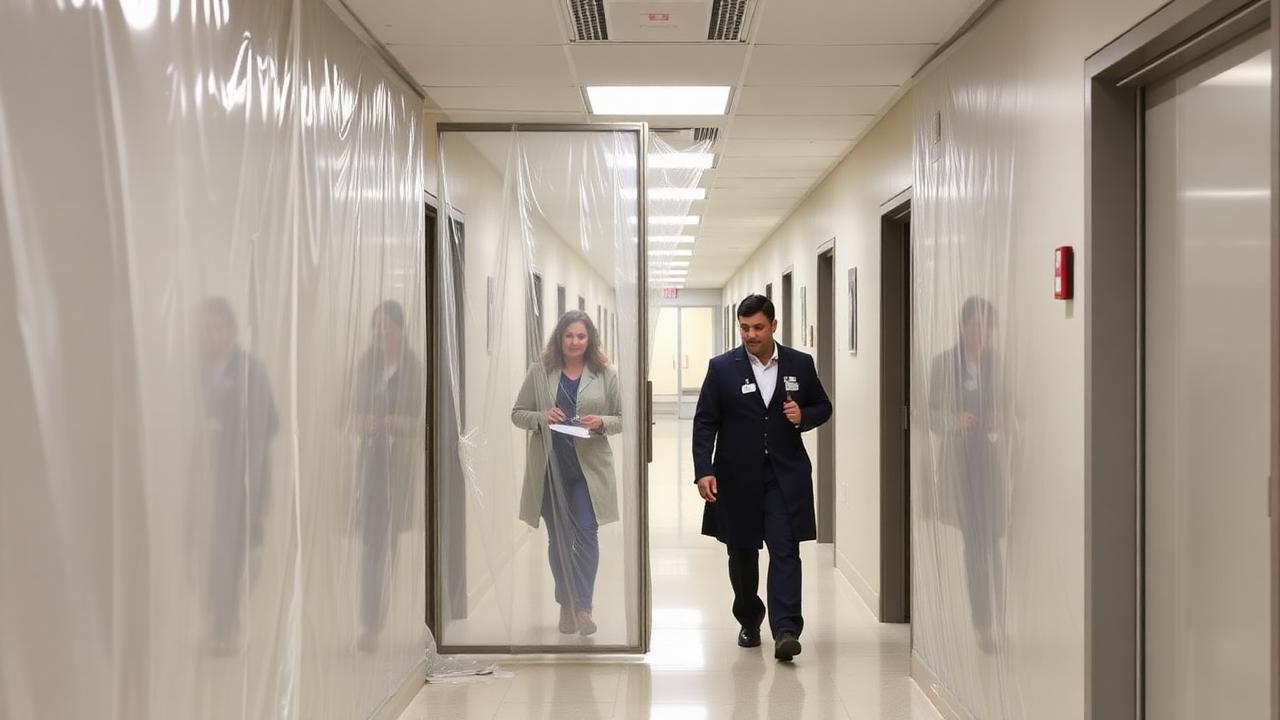
Renovating an occupied healthcare facility is a different exercise from renovating an empty office suite. On the other side of the barrier there are patients, some of whom are immunocompromised, and construction dust is not an appearance issue for them.
Cleaning is one component of the infection control measures that surround this work, and it needs to be planned alongside the construction rather than scheduled after it.
The framework
Healthcare facilities conduct an infection control risk assessment before construction or renovation begins. That assessment considers the type of work and the vulnerability of the patient population nearby, and it produces a set of required precautions.
Those precautions typically address containment, air handling, traffic routing, waste removal, and cleaning. Cleaning is not a separate track. It is one of the controls, and the assessment usually specifies what is required and how often.
Anyone cleaning in or around the work area should understand what the assessment requires for that project. A vendor who has never heard of the process is not equipped for the environment.
Containment is the primary control
Barriers separate the construction zone from occupied space. Depending on the risk level, these range from plastic sheeting to sealed rigid barriers, often with negative air pressure inside the work zone so that air flows in rather than out.
Cleaning responsibilities around containment include maintaining the transition zone at the barrier entrance, cleaning the occupied side of barriers on a defined schedule, and immediately addressing any dust that escapes. Walk-off mats at barrier openings need regular replacement, since a saturated mat stops working.
Barrier integrity itself should be checked visually during every cleaning pass. Gaps at ceilings, floors, and door edges are the usual failure points.
The transition zone determines everything
Most dust migration into occupied space happens at the barrier entrance, carried by workers and equipment. The area immediately outside the entrance is the highest-value cleaning target in the entire project, and it usually needs attention multiple times daily rather than nightly.
Debris removal routes matter for the same reason. Waste should be covered or contained in transit, moved along a designated route, and the route should be cleaned after each removal rather than at end of day.
Cleaning the work area before reoccupancy
Before barriers come down and the space returns to clinical use, the area needs a thorough cleaning that goes beyond a standard final construction clean.
Sequencing matters. Barriers should come down after the cleaning inside is complete, not before.
Coordination across three parties
The general contractor, the facility's environmental services team, and any specialty cleaning vendor all have roles here, and gaps between them are where problems occur. The scope should state in writing who cleans the work zone, who cleans the occupied side of the barrier, who handles the transition zone, at what frequency, and who verifies before reoccupancy.
Ambiguity in that split is the most common cause of dust showing up in a patient corridor.
Highland works in occupied healthcare facilities
We provide post-construction and post-renovation cleaning for healthcare facilities across New York City, Westchester, and Long Island, with staff trained in infection control and protocols that fit within your facility's risk assessment requirements.
Call 516-361-3511 to coordinate around an upcoming project.
Post-Construction Cleanup
Serving NYC, Westchester, and Long Island. Request an on-site walkthrough and we will put a written scope together for your building.