
How Building Cleanliness Affects Tenant Retention in Westchester Office Buildings
Cleanliness is one of the few tenant experience factors a landlord fully controls. Here is how it shows up in renewal conversations.
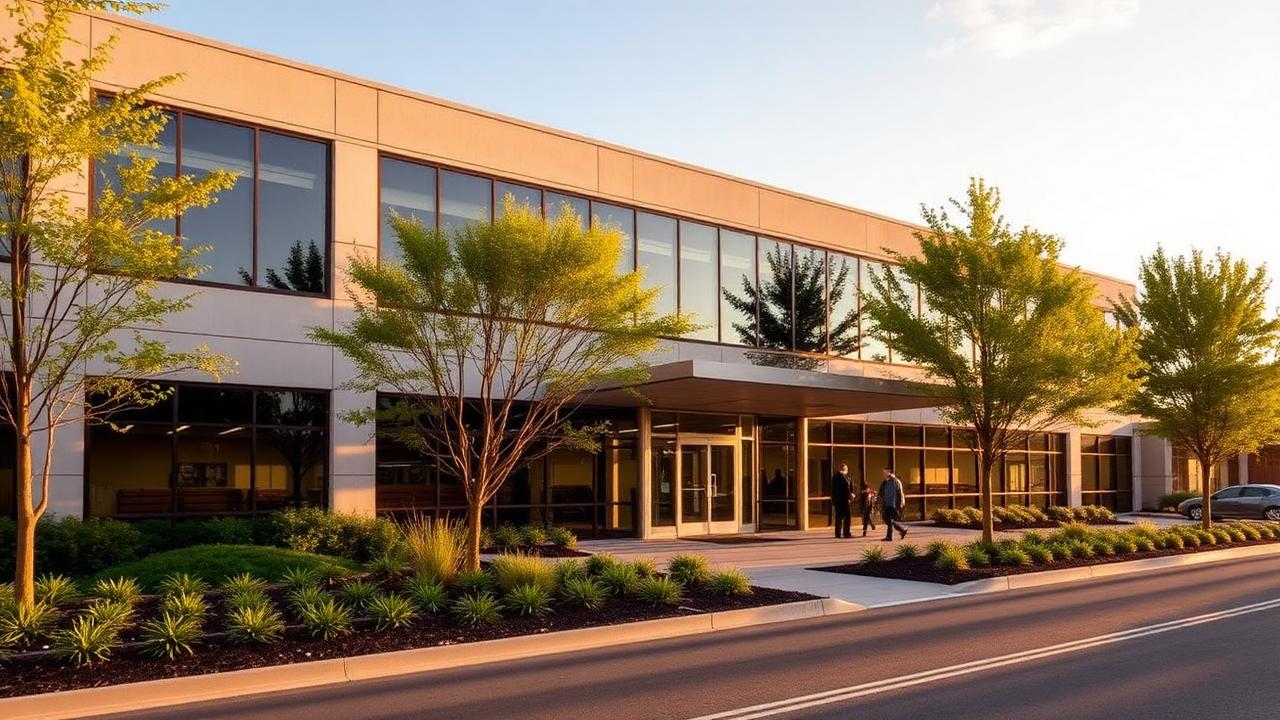
Westchester office landlords are competing on a narrower set of levers than they were a decade ago. Tenants have more flexibility about how much space they need and where they take it, and the buildings holding occupancy are generally the ones where the day-to-day experience gives nobody a reason to look elsewhere.
Cleanliness is unusual among those levers because it is entirely within the landlord's control, it is relatively inexpensive to improve, and it is noticed continuously by every person who works in the building.
Nobody renews because of a clean lobby, but people leave over a dirty one
Cleanliness is asymmetric. Excellent conditions are rarely mentioned in a renewal conversation. Poor conditions surface immediately, and they carry more weight than their actual cost to fix, because they are read as a signal about how the building is run overall.
A tenant whose restrooms are inconsistently stocked, whose common areas look tired by mid-afternoon, and whose entry is dingy after a snowstorm draws a conclusion about responsiveness in general. That conclusion is present in the room when the renewal terms are discussed.
Where the complaints actually come from
In our experience across suburban office properties, tenant complaints concentrate in a predictable set of places.
Almost all of these are daytime problems, which is why buildings with only overnight coverage struggle with them regardless of how good the night crew is.
The exterior sets the expectation
Suburban buildings in White Plains, Yonkers, New Rochelle, Scarsdale, and Rye are approached from a parking lot or a sidewalk rather than from a busy street, which means the exterior gets a longer look than it does in a dense urban setting.
Sidewalk and plaza staining, entry canopy grime, gum, and building façade soil are all visible in that approach. Periodic power washing on a scheduled basis rather than a reactive one is one of the highest-visibility, lowest-cost improvements available to a suburban property.
Floors are the long-term cost
Stone and terrazzo lobbies in Westchester buildings take a beating from four months of salt annually. Salt residue dulls polished surfaces and, left in place, etches them. The damage accrues quietly and then requires restoration rather than maintenance.
Buildings that run a defined winter floor protocol, meaning adequate entry matting, frequent daytime attention to entries, prompt salt removal, and a scheduled polishing program, generally spend less over a ten-year hold than buildings that restore floors every few years.
Make cleanliness visible
Tenants judge based on what they see, which means work performed invisibly at 2 a.m. generates no credit. Buildings that run a daytime porter get the benefit of both the work and the visible evidence that the building is being attended to.
The same logic applies to communication. A brief note to tenants when a scheduled deep clean, floor restoration, or exterior wash is happening converts routine maintenance into a demonstration of management.
Highland serves Westchester properties
We provide janitorial services, day porter coverage, stone and terrazzo floor care, and power washing across White Plains, Yonkers, New Rochelle, Scarsdale, Mount Vernon, and Rye, as well as New York City and Long Island.
Call 516-361-3511 or request an on-site walkthrough of your property.
Class A Office Cleaning
Serving NYC, Westchester, and Long Island. Request an on-site walkthrough and we will put a written scope together for your building.
What Class A Office Cleaning Should Include, and What Most Contracts Miss
Class A buildings need more than a standard janitorial scope. Here is what should be in the contract and where most agreements leave gaps.
ReadDay Porter or Night Crew: Choosing the Right Coverage Model for a Multi-Tenant Building
Day porters and night crews solve different problems in a commercial building. Here is how to decide what your property actually needs.
Read