
How to Write a Janitorial Scope of Work That Actually Gets Followed
Most janitorial disputes trace back to a vague scope. Here is how to write one that sets clear expectations and holds up over a contract term.
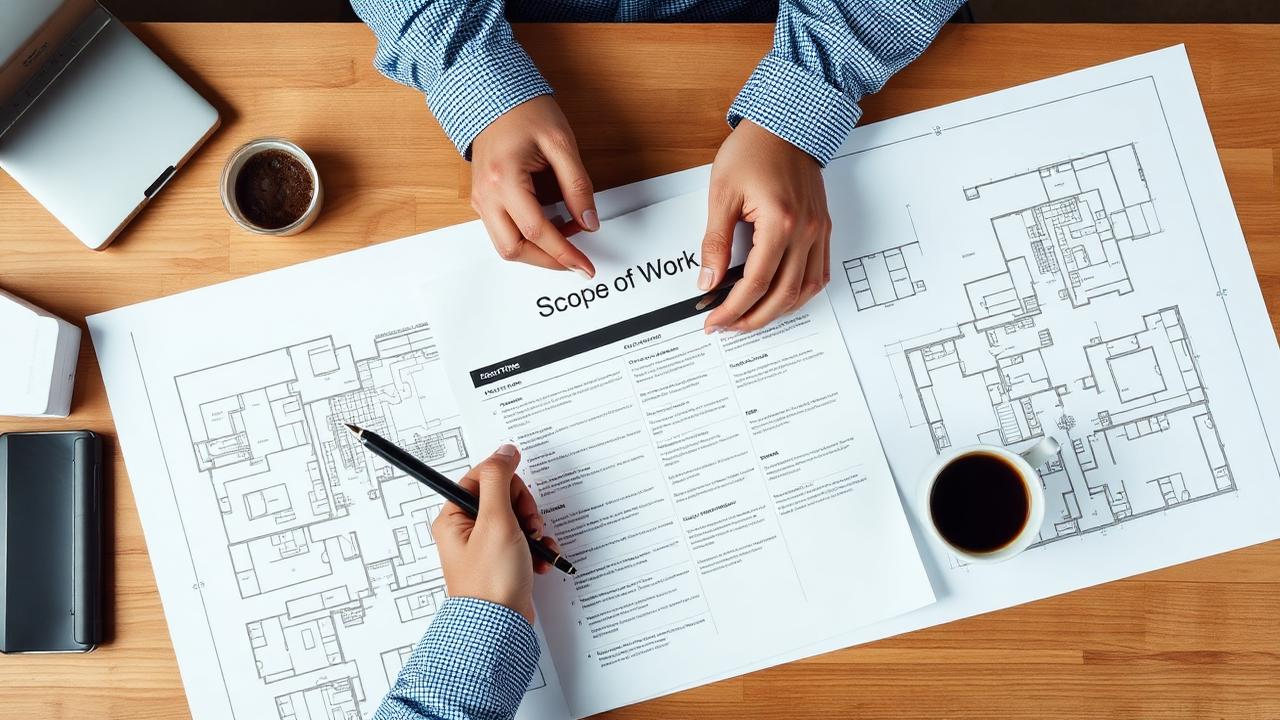
Almost every janitorial dispute we have been asked to resolve traced back to the same root cause. The contract said the vendor would keep the building clean, and the two parties had different pictures of what that meant.
A good scope of work is not longer than a bad one. It is more specific in a few places that matter.
Define areas before tasks
Start by listing every space in the building, including the ones nobody thinks of as cleanable: loading dock, freight elevator lobby, electrical and mechanical rooms, stairwells, roof access landings, parking areas, storage rooms, and exterior entries.
Areas that do not appear on the list are not in the contract. This is the most common source of the gap between what a property manager expects and what a vendor priced.
Specify frequency per task, not per area
A lobby is not cleaned at one frequency. The floor may be attended daily, the glass twice daily, the high ledges quarterly, and the stone polished monthly. Collapsing all of that into daily lobby cleaning creates ambiguity that gets resolved in the vendor's favor when the schedule gets tight.
A frequency matrix, with areas down one axis and tasks across the other, removes the ambiguity in a single page.
Name the surfaces and the standard
Where finishes are sensitive, the scope should name them. Marble, limestone, terrazzo, sealed concrete, luxury vinyl tile, and wood all require different products and methods, and the wrong choice damages them permanently.
The scope should also state which party supplies products, and whether the owner has approval rights over product selection. In healthcare and laboratory settings, this is not optional.
Include the things that are not cleaning
A significant portion of what a janitorial vendor actually does is adjacent to cleaning. The scope should address it explicitly.
Build in periodic work as a schedule, not an option
Carpet extraction, hard floor stripping and refinishing, stone polishing, high dusting, light fixture cleaning, window washing, and exterior power washing are periodic. If they appear in the contract as available upon request, they will be requested only after someone notices the building looks bad.
Putting them on a calendar with defined frequencies converts them into predictable budget and predictable condition.
Define how performance is measured
A scope without an inspection process is an aspiration. Specify who inspects, how often, against what checklist, and what the correction timeline is when something fails. A monthly joint walkthrough between the property manager and the vendor supervisor is more effective than any other single quality control mechanism, because it forces both parties to look at the same building at the same time.
Leave room for the building to change
Occupancy shifts, tenants renovate, amenity spaces get added. A scope should include a mechanism for adjusting hours and tasks without renegotiating the entire agreement, along with an agreed rate structure for additional work.
Highland will help you write it
We provide recurring janitorial services across New York City, Westchester, and Long Island, and we are comfortable working from a detailed specification because that is how good work gets recognized. If you are preparing an RFP or renewing a contract, we will walk your building and help you build the scope even before pricing is discussed.
Call 516-361-3511 or request a walkthrough.
Janitorial Services
Serving NYC, Westchester, and Long Island. Request an on-site walkthrough and we will put a written scope together for your building.